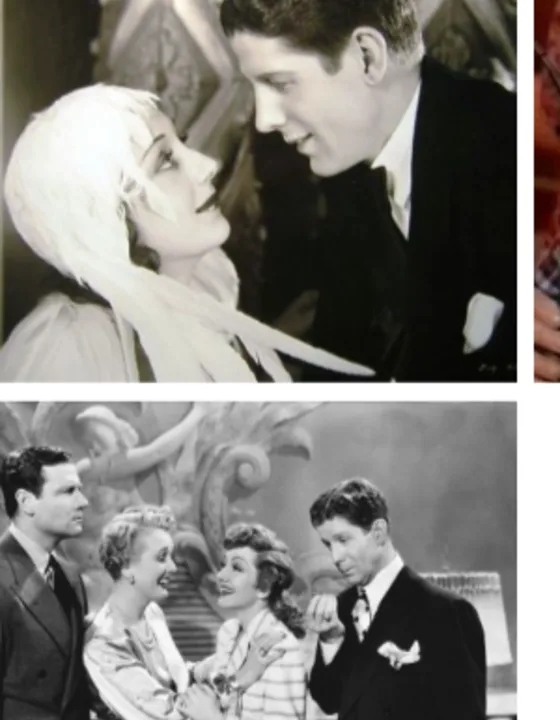
Rudy Vallée did not simply perform songs — he restructured how America consumed them. Before him, popular vocalists were stage projectors trained to fill theaters without amplification. Vallée walked onstage with a megaphone, leaned into a microphone, and made intimacy a commercial product. That shift echoed through every decade that followed.
The Problem With Pre-Vallée Pop Vocals
American popular music in the 1920s was built around volume and theatrical delivery. Al Jolson could fill the Winter Garden Theatre unaided. Vaudeville demanded projection. The voice was an instrument of spectacle, not of closeness.
Radio changed the physics. A broadcast microphone captured everything — breath, subtle pitch variation, the slight roughness at the edge of a held note. The theatrical tenor who sounded powerful on stage sounded mechanical and cold over the airwaves. Most established vocalists of the era never successfully bridged that gap.
Vallée understood the microphone as a collaborator, not a tool. His baritone-adjacent tenor was not the loudest in any room, but it sat perfectly in the frequency range that early RCA ribbon microphones reproduced most naturally — roughly 200 Hz to 4 kHz. That was not an accident. He studied and adapted.
How Vallée Defined the Crooner Template
The word "crooner" existed before Vallée, but it had no professional model attached to it. He gave it one. The characteristics he established became the blueprint every subsequent vocalist either followed or consciously departed from:
| Element | Vallée's Approach | Later Adoption |
|---|---|---|
| Microphone distance | 6-12 inches, consistent | Standard studio practice by 1935 |
| Phrasing | Conversational, mid-tempo | Copied directly by Crosby, later Sinatra |
| Vibrato | Controlled, light at end of phrases | Contrast: Jolson used heavy terminal vibrato |
| Lyric emphasis | Emotional words over rhythmic beats | Became default in Tin Pan Alley arrangements |
| Stage persona | Collegiate, approachable | Replaced the theatrical "star distance" model |
Bing Crosby acknowledged the debt publicly. In a 1950s interview, Crosby stated that Vallée's radio work on The Fleischmann's Yeast Hour showed him that a singer could operate at conversational volume and still command an audience of millions. Frank Sinatra, who studied Crosby's phrasing obsessively, was therefore two generations downstream from Vallée's original template.
Radio as the Real Stage: The Fleischmann's Yeast Hour
When NBC launched The Fleischmann's Yeast Hour in October 1929, it became the first successful network variety show built around a single bandleader-vocalist host. The format itself was new. Vallée was not just performing — he was programming, introducing guests, writing continuity, and shaping the audience's relationship with the broadcast schedule.
By 1930 the show was drawing an estimated 15 to 20 million listeners per broadcast at a time when the total U.S. population was 123 million. That reach had no precedent in American entertainment. Theater could not produce those numbers. Recording sales in 1929, devastated by the stock market crash, could not either.
What Vallée built on radio was parasocial before the concept had a name. He read fan mail on air. He addressed listeners by region. He used a warm, familial tone that separated him completely from the announcer-style delivery most radio hosts used. Audiences wrote to him as though he were a personal friend. His mailbag in peak years reportedly exceeded 10,000 letters per week.
This format — intimate host, mixed entertainment, direct audience address — is the structural ancestor of every talk-variety program that followed, from Arthur Godfrey through to modern podcast-style broadcast personalities.
Vallée and the Business of the Song
His influence extended beyond delivery into how songs were selected, promoted, and monetized. Vallée had an unusually aggressive relationship with song publishers. He held publishing interests in several of his signature recordings, which was uncommon for a performer in 1928-1932. He understood that the record, the radio broadcast, and the sheet music sale were three separate revenue streams from the same song.
Songs he recorded or performed on radio received what later became known as the "Vallée bump" — a measurable increase in sheet music sales following broadcast. Publishers tracked this. By 1931, getting a song on The Fleischmann's Hour was considered more commercially valuable than a feature placement in a Broadway show.
Notable songs associated directly with his radio promotion:
- "Vagabond Lover" (1929) — title became a permanent nickname
- "I'm Just a Vagabond Lover" — generated sheet music sales exceeding 200,000 copies within six months of broadcast
- "As Time Goes By" — Vallée performed an early version before Casablanca made it famous
- "You're Driving Me Crazy" — entered the standard repertoire partly through his sustained radio play
- "My Time Is Your Time" — adopted as his theme song, still recognizable as his signature
Film Work and the Crooner's Visual Problem
When sound film arrived, Hollywood needed performers who could translate audio charisma to screen. Vallée's transition to film exposed both the possibilities and limitations of the crooner format in a visual medium.
His early films — The Vagabond Lover (1929), International House (1933), George White's Scandals (1934) — cast him as a version of himself. Studios had not yet figured out how to make a soft-voiced intimate singer into a dramatic lead. He was personable on screen but the roles were thin.
His genuine film breakthrough came much later with The Palm Beach Story (1942), directed by Preston Sturges. Playing J.D. Hackensacker III, a deadpan, quietly absurd millionaire, Vallée demonstrated comedic timing that had been invisible in his musical roles. Critics at the time noted that the distance between his stage persona and the character created a productive irony. He used his own recognizable vocal mannerisms against audience expectation.
This arc — musical star struggles with dramatic film, finds second life in character comedy — repeated with Dean Martin in the 1950s and was deliberately inverted by Frank Sinatra, who pushed hard for dramatic roles (From Here to Eternity, 1953) specifically to avoid being confined to the musical-performer box that Vallée had occupied.
Specific Technical Contributions to Recording Practice
Vallée's work in the studio between 1928 and 1936 coincided with the transition from acoustic to electrical recording. He was an early and consistent user of the condenser microphone in live performance contexts, not just in studio sessions.
Three technical practices attributed to his influence:
1. Close-miking for vocal intimacy became standard in commercial recording by 1933, after his radio work normalized the sound for audiences 2. The practice of recording multiple takes and selecting the best for commercial release — now universal — was adopted by his recording sessions at Victor Records before it became industry standard 3. Arranging for voice-forward balances, where the orchestra sits 3 to 6 dB below the vocal line, was a departure from the band-record norm of the late 1920s where vocals were often buried
The Generational Chain of Influence
Mapping the direct and indirect lines of influence clarifies why Vallée's contribution is structural rather than stylistic:
| Generation | Artist | Connection to Vallée |
|---|---|---|
| Direct | Bing Crosby | Acknowledged Vallée as model for radio intimacy |
| Direct | Russ Columbo | Competed in the same market 1931-1934, used identical mic technique |
| Secondary | Frank Sinatra | Studied Crosby, absorbed Vallée's phrasing through him |
| Secondary | Perry Como | Como's relaxed delivery is a direct continuation of the Vallée-Crosby register |
| Tertiary | Tony Bennett | Bennett's lyric emphasis and breath control trace back through Sinatra |
| Tertiary | Andy Williams | Williams cited Como, who cited Crosby, who cited Vallée |
The chain does not end with the classic pop era. The intimate vocal delivery normalized by Vallée is the baseline assumption of modern studio recording. Bedroom pop, lo-fi recording aesthetics, and the vocal production choices on streaming-era releases all operate within a framework that assumes microphone closeness and conversational dynamics. That assumption was not natural — it was built, primarily in the years between 1928 and 1935, and Vallée built most of it.
Why Music Historians Undercount His Impact
Vallée's reputation suffered from several factors that distorted the historical record:
- His peak career predated the LP era, so his work is not organized around the album-as-statement format that critics use
- The megaphone image became a caricature that obscured the sophistication of his microphone work
- His comedy success in the 1940s and 1950s placed him in the "entertainer" rather than "musician" category in most retrospective coverage
- Crosby's personality and global reach made him the visible symbol of crooning, absorbing credit for a format Vallée established
Reliable archival documentation — NBC broadcast recordings, Victor Records session logs, contemporary Billboard and Variety coverage — supports a reading of Vallée as the primary architect of the intimate vocal style, with Crosby as the figure who globalized it.