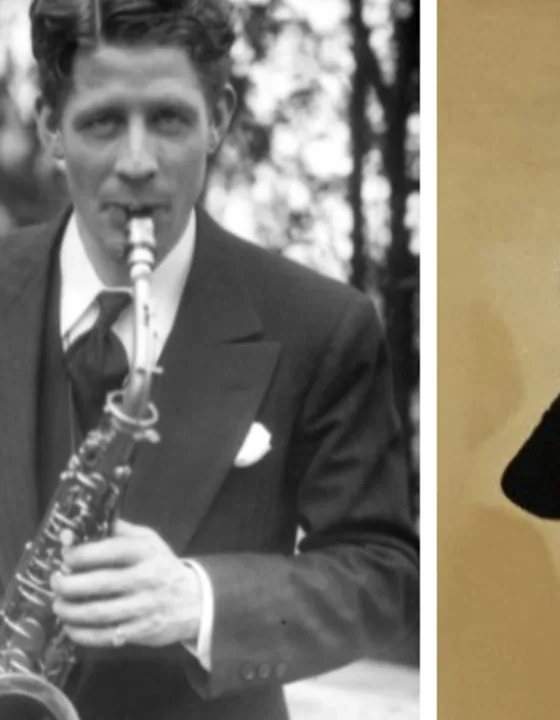
Rudy Vallée was one of the defining entertainment figures of early 20th-century America, but his stage work on Broadway remains one of the least documented chapters of his career. Known primarily as the "Vagabond Lover" of radio and film, Vallée brought his baritone megaphone style and bandleader charisma to the legitimate stage — with results that surprised critics and expanded his audience well beyond the ballroom.
From Radio to the Stage: Why Broadway Made Sense
By the late 1920s, Vallée had built a national following through his NBC radio broadcasts from the Villa Lorraine and the Heigh-Ho Club in New York. That audience loyalty translated directly into ticket sales. Broadway producers recognized that a performer with guaranteed name recognition could fill seats without relying solely on critical acclaim.
Vallée's transition to stage was also driven by the economics of the entertainment industry at the time. Radio contracts paid well, but Broadway offered prestige — and for a performer of Vallée's ambition, prestige mattered as much as income.
George White's Scandals: Vallée's Most Significant Broadway Credit
The most prominent entry in Vallée's Broadway history is his appearance in George White's Scandals of 1931. This annual revue series, which ran from 1919 through the mid-1930s, was the primary rival to Florenz Ziegfeld's Follies in the Broadway revue market.
Key facts about Vallée's involvement:
- The 1931 edition opened at the Apollo Theatre on Broadway
- Vallée served as both performer and featured bandleader
- The show ran for 202 performances — a solid run for a Depression-era production
- Co-stars included Ethel Merman, Willie Howard, and Ray Bolger
- Songs featured were written by Lew Brown and Ray Henderson
The 1931 Scandals is historically significant because it premiered Ethel Merman on Broadway in a major role. Vallée's participation placed him in the same production as one of the great voices of American theater — a fact that often gets overlooked in Vallée biographies.
What Vallée Actually Did on Stage
Vallée's Broadway performances were not conventional acting roles. His stage presence was built around:
| Performance Element | Description |
|---|---|
| Bandleading | Directed his Connecticut Yankees orchestra from the stage |
| Crooning | Performed signature ballads using the megaphone style he popularized |
| Comedy sketches | Participated in revue-style comedy segments with co-performers |
| MC duties | Served as a connecting host figure between acts in revue format |
This format suited Vallée well. He was not a trained actor in the dramatic sense, but he was an exceptionally skilled entertainer who understood pacing, audience interaction, and how to hold a room. The revue format gave him structure without requiring him to carry a narrative through a book musical.
Broadway Context: What the Stage Scene Looked Like in 1931
Understanding Vallée's Broadway career requires knowing what Broadway was in 1931. The Depression had already begun to hollow out the entertainment industry. Productions that would have run comfortably in 1928 were folding after two weeks by 1931.
A few reference points:
- Broadway had approximately 264 active productions in the 1927-28 season — its peak
- By 1931-32, that number had dropped to around 190
- Ticket prices fell sharply; producers competed aggressively for name talent
- Radio stars like Vallée were actively recruited because their names reduced financial risk
Vallée's involvement in the Scandals was partly a business decision by George White: a radio celebrity brought built-in press coverage and a pre-sold audience. Vallée's weekly radio audience at the time was estimated at ten million listeners.
Other Stage Appearances and Theater-Adjacent Work
Beyond the 1931 Scandals, Vallée's stage career included a range of theater-adjacent appearances that blurred the line between variety entertainment and legitimate theater:
- Palace Theatre engagements — Vallée performed multiple times at the Palace on Broadway, then the apex of American vaudeville
- Benefit performances — He appeared regularly in charity and benefit shows staged at Broadway venues during the 1930s
- Touring productions — While not Broadway proper, Vallée took productions to major East Coast cities including Boston, Philadelphia, and Washington D.C., often playing houses that were direct feeder venues for Broadway
One documented Palace engagement in 1929 reportedly broke box office records for the week. Vallée's band and his radio-trained vocal delivery translated well to the large vaudeville house format.
How Much Money Did Broadway Shows Make in This Era?
This is a question relevant to understanding Vallée's career decisions. Depression-era Broadway economics looked like this:
| Year | Average Weekly Gross (Top Show) | Average Ticket Price | Notes |
|---|---|---|---|
| 1928 | ~$35,000 | $3.50–$5.50 | Pre-crash peak |
| 1931 | ~$18,000–$22,000 | $1.50–$3.00 | Depression pricing |
| 1933 | ~$12,000–$16,000 | $1.00–$2.50 | Lowest point |
For a production like the Scandals with a name draw like Vallée, weekly grosses likely stayed in the upper range for 1931. Vallée's personal fee for Broadway work at this period has not been precisely documented, but his radio contracts at NBC were reportedly worth $1,500 to $3,000 per week depending on the year — figures that gave him significant negotiating leverage.
Vallée's Stage Style Compared to Contemporaries
How did Vallée's Broadway presence compare to other performers working the same stages?
Bing Crosby — Never appeared on Broadway in a significant stage production during the 1930s, choosing film over theater almost exclusively after radio success.
Eddie Cantor — A direct comparison case. Cantor was a Ziegfeld Follies veteran who moved fluidly between stage, radio, and film. His theatrical training was deeper than Vallée's, but both occupied similar commercial niches.
Kate Smith — Like Vallée, she was primarily a radio figure. Her Broadway work was also limited, and she faced similar critical skepticism about whether radio fame translated to stage legitimacy.
Vallée occupied a specific position: more stage-comfortable than Crosby, less theatrically trained than Cantor, but possessing a showmanship quality that worked in the revue format Broadway favored during that era.
Critical Reception: What Reviewers Actually Said
Contemporary theater criticism of Vallée's Broadway work was mixed but generally respectful. The pattern in reviews from 1931 tends to follow a consistent line:
- Critics acknowledged his crowd appeal and professional delivery
- Some questioned whether his performance constituted "acting" in any meaningful sense
- Most agreed he was effective within the revue format
- His bandleading was frequently singled out as the strongest element of his stage presence
The New York theatrical press of 1931 was not inclined to be generous toward radio personalities crossing into theater. The view that radio was a lesser medium persisted in Broadway critical circles through the mid-1930s. Vallée faced that bias directly, and the fact that the 1931 Scandals ran for 202 performances suggests audiences disagreed with the critical establishment.
The Legacy Question: Did Broadway Shape Vallée's Later Career?
The answer is yes, in specific ways. His Broadway experience:
1. Gave him credibility with Hollywood producers who viewed stage work as proof of live performance ability 2. Refined his comedy timing — skills visible in his later film work at Paramount and RKO 3. Connected him professionally with performers like Ethel Merman and Ray Bolger who remained significant figures in American entertainment for decades 4. Established a template for the radio-star-to-stage crossover that others would follow
His most commercially successful later film, "The Palm Beach Story" (1942, Paramount, directed by Preston Sturges), showed the comedy instincts that Broadway had developed. The character of John D. Hackensacker III — fastidious, comic, slightly absurd — drew directly on stage timing Vallée had built in revue performance.
Rudy Vallée's Broadway Career at a Glance
| Production | Year | Venue | Role Type | Performances |
|---|---|---|---|---|
| George White's Scandals | 1931 | Apollo Theatre, Broadway | Featured Performer / Bandleader | 202 |
| Palace Theatre Engagements | 1929, 1930 | Palace Theatre | Headliner / Vaudeville | Multiple weeks |
| Benefit & Charity Shows | 1930s | Various Broadway Venues | Guest Performer | Numerous |