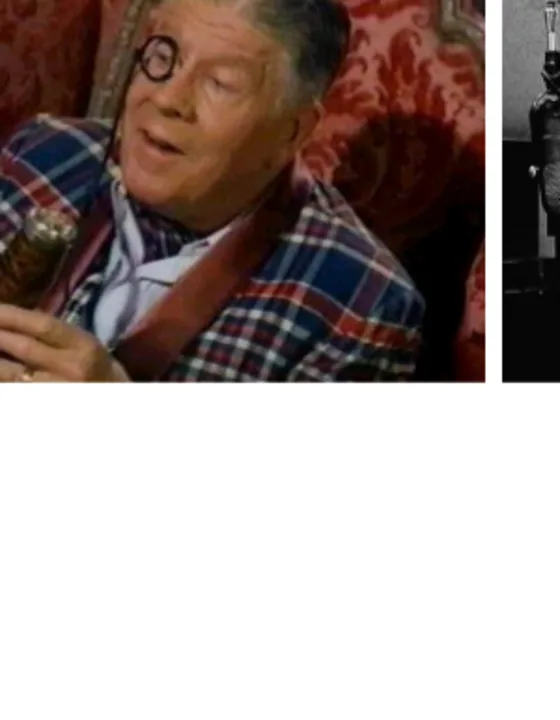
Rudy Vallée did not simply have a career. He built a template. Before Elvis had hips, before Sinatra had phrasing, and before the term "teen idol" existed, Vallée was causing fainting spells in theater aisles and receiving thousands of fan letters a week. His legacy spans radio, film, recordings, Broadway, and a shift in how Americans consumed celebrity.
Who Was Rudy Vallée
Hubert Prior Vallée was born July 28, 1901, in Island Pond, Vermont. He taught himself the saxophone by ear, attended Yale University, and adopted the stage name "Rudy" as a tribute to saxophonist Rudy Wiedoeft. By his mid-twenties, he was the most recognized voice on American radio.
Key biographical facts:
| Category | Detail |
|---|---|
| Birth name | Hubert Prior Vallée |
| Born | July 28, 1901, Island Pond, Vermont |
| Died | July 3, 1986, North Hollywood, California |
| Primary instrument | Saxophone, vocals |
| Signature catchphrase | "Heigh-Ho, Everybody!" |
| Yale affiliation | Class of 1927 |
| Marriages | Four, including actress Eleanor Norris (1943–1986) |
The Megaphone and the Birth of the Crooner Style
Before microphone amplification became standard in live performance, Vallée used a megaphone on stage to project his voice into crowds. The gesture became iconic, but the real innovation was vocal. He sang softly, intimately, almost conversationally — a direct contrast to the projecting tenors of the vaudeville era.
This approach was not stylistic accident. Radio broadcasting rewarded restraint. A voice that boomed over a microphone distorted. Vallée understood this intuitively and performed as if speaking directly into a listener's ear. Bing Crosby and Perry Como would later refine the same technique, but Vallée normalized it first.
His style influenced the crooner tradition in three measurable ways:
- Replaced theatrical vocal projection with mic-friendly intimacy
- Established the saxophone as a lead pop instrument, not a jazz-only tool
- Introduced the bandleader-as-personality format that defined the swing era
The Fleischmann's Yeast Hour: Radio's First Superstar Vehicle
In October 1929, Vallée debuted "The Fleischmann's Yeast Hour" on NBC Radio. The show ran until 1939 — a decade of weekly broadcasts that made him a household name across the country. At a time when radio reached approximately 40% of American homes, the show functioned as the era's equivalent of a streaming platform launch.
The format was groundbreaking. Vallée mixed musical performances with comedy sketches, celebrity interviews, and scripted banter. He introduced guest performers including Eddie Cantor, Alice Faye, and a then-unknown Bob Hope. The structure he used became the template for The Tonight Show, variety television, and podcast interview formats.
Ratings data from the early 1930s placed the show consistently among NBC's top three programs. Sponsor Fleischmann's Yeast reported a significant sales increase tied directly to the broadcast.
Hollywood: From Romantic Lead to Character Actor
Vallée's film career covered more than 40 years and three distinct phases:
Phase 1 — The Romantic Lead (1929–1937)
His first feature, "The Vagabond Lover" (1929), was produced to capitalize on his radio fame. It was a commercial success despite mixed reviews. Films like "George White's Scandals" (1934) and "Sweet Music" (1935) kept him visible in Hollywood while his radio dominance continued.
Phase 2 — The Comedic Supporting Player (1941–1955)
Director Preston Sturges cast Vallée against type in "The Palm Beach Story" (1942), playing J.D. Hackensacker III — a stuffy, fussy millionaire. The performance revealed genuine comic timing. Film historians now consider it among the sharpest character work in 1940s Hollywood comedy. Sturges used him again in "The Beautiful Blonde from Bashful Bend" (1949).
This reinvention was not accidental. Vallée actively sought roles that subverted his crooner image. The strategy extended his film career by nearly two decades beyond what most of his contemporaries achieved.
Phase 3 — Television and Broadway Crossover (1960–1975)
Vallée's role as J.B. Biggley in the original Broadway production of "How to Succeed in Business Without Really Trying" (1961) earned him a Tony Award. The role played directly on his reputation as an Establishment figure while the show satirized corporate culture. He reprised the role in the 1967 film adaptation alongside Robert Morse.
Television appearances through the 1960s and 1970s included "The Dean Martin Show," "Rowan & Martin's Laugh-In," and "The Tonight Show" under multiple hosts. He remained recognizable to three separate generations simultaneously.
Discography and Recording Legacy
Vallée began recording for Victor Records in 1928. His catalog spans the transition from acoustic to electric recording, from 78 rpm shellac to LP format. Key recordings that defined his commercial peak:
| Year | Title | Label | Significance |
|---|---|---|---|
| 1928 | "Honey" | Victor | First major hit, million-seller |
| 1929 | "Deep Night" | Victor | His signature ballad style |
| 1931 | "As Time Goes By" | Columbia | First recorded version of the standard |
| 1934 | "Brother, Can You Spare a Dime?" | Various | Depression-era cultural document |
| 1937 | "You Oughta Be in Pictures" | Various | Radio era catalog peak |
Vallée recorded "As Time Goes By" a full decade before Dooley Wilson's version appeared in Casablanca (1942). Many listeners who know the song from the film are unaware of its earlier life in Vallée's catalog.
His total recorded output exceeds 400 commercial sides between 1928 and the mid-1960s.
Archival Significance: What Survives and Why It Matters
Vallée was an active archivist of his own career. He preserved correspondence, photographs, broadcast transcripts, program notes, and personal diaries. This material now constitutes one of the more complete records of American entertainment from the late 1920s through the 1960s.
The Library of Congress holds radio transcription discs from the Fleischmann's Yeast Hour. Yale University's archive contains correspondence and personal papers. Private collections hold additional photograph and ephemera collections.
For researchers studying:
- Early radio broadcasting structure and sponsorship models
- The transition from vaudeville to radio to television
- Pre-war popular music production and distribution
- Hollywood studio system casting and contract practices
Vallée's preserved materials offer primary source documentation unavailable elsewhere at the same density.
Cultural Impact Measured Against His Contemporaries
Comparing Vallée's cultural footprint to his direct contemporaries clarifies his position:
| Entertainer | Radio Peak | Film Transition | Broadway | Television Longevity |
|---|---|---|---|---|
| Rudy Vallée | 1929–1939 | Strong | Tony winner | Active through 1970s |
| Russ Columbo | 1931–1934 | Limited | None | N/A (died 1934) |
| Bing Crosby | 1931–1954 | Very strong | Limited | Moderate |
| Kate Smith | 1931–1947 | Minimal | None | Moderate |
| Eddie Cantor | 1931–1954 | Moderate | Strong | Moderate |
Vallée outlasted most peers in active relevance. His ability to reinvent across media without losing name recognition is genuinely uncommon in entertainment history.
Why the Legacy Gets Underestimated
Vallée's reputation suffered from the same mechanism that buried many pre-war entertainers: the cultural reset of rock and roll in the mid-1950s made everything before it seem antiquated by default. His vocal style, associated with an era of megaphones and big bands, read as campy rather than foundational to listeners whose frame of reference began with Elvis.
The irony is structural. Vallée invented a model of celebrity — intimate broadcast persona, multi-platform visibility, music as personality vehicle — that rock era performers executed on a larger scale. The template preceded the execution by 25 years.
Music historians writing in the late 1990s and early 2000s began reassessing this gap. Scholars like Charles Hamm (in "Yesterdays: Popular Song in America") and Will Friedwald (in "Jazz Singing") noted Vallée's position not as a historical footnote but as a genuine inflection point.
Rudy Vallée's Influence on Later Performers
Direct and documented influences include:
- Frank Sinatra acknowledged Crosby and Vallée as the two performers who showed him that a male singer did not need to perform loudly to hold an audience
- Tony Bennett cited Vallée's phrasing in early recordings as a study model
- The comedic reinvention arc — pop star becomes self-aware character actor — was later followed by Dean Martin, Frank Sinatra (in "The Manchurian Candidate"), and more recently by musicians crossing into dramatic film roles
The pattern Vallée established: broadcast fame, film crossover, deliberate self-parody to extend relevance, remains one of the cleaner career navigation models in American entertainment history.